Forklift Training Singapore – Build a Safer, Smarter Workforce
Every year, workplace accidents involving forklifts and other material handling equipment cost Singaporean businesses millions in medical expenses, legal fees, and lost productivity. Yet many of these incidents are entirely preventable. The common thread linking most forklift-related accidents is inadequate operator training. When drivers are not properly instructed in safe operating procedures, they become liabilities rather than assets to their organisations.
UMW offers comprehensive training courses approved by the Ministry of Manpower and SkillsFuture Singapore for powered industrial trucks. These programmes are designed to address the specific challenges faced by operators in Singapore's demanding industrial environment. By investing in professional instruction, businesses can significantly reduce accident rates, extend equipment life, and improve operational efficiency. This article examines the benefits of accredited operator education and why it should be a priority for every company that uses forklifts.
Key Takeaways:
-
Accredited operator education reduces workplace accidents and associated liabilities.
-
Preventive maintenance knowledge extends equipment lifespan and lowers repair costs.
-
MOM-approved certification ensures full legal compliance for your operations.
-
Skilled operators improve throughput and minimise product damage.
-
UMW's programmes are regularly updated to reflect current industry standards.
Building a Competent and Confident Workforce
The foundation of any safe and efficient warehouse operation is the competence of its equipment operators. A driver who has received proper instruction understands the capabilities and limitations of their machine. They know how to assess load weights, maintain stability during turns, and navigate through congested areas without endangering themselves or others. Without this knowledge, even the most sophisticated forklift becomes a potential hazard.
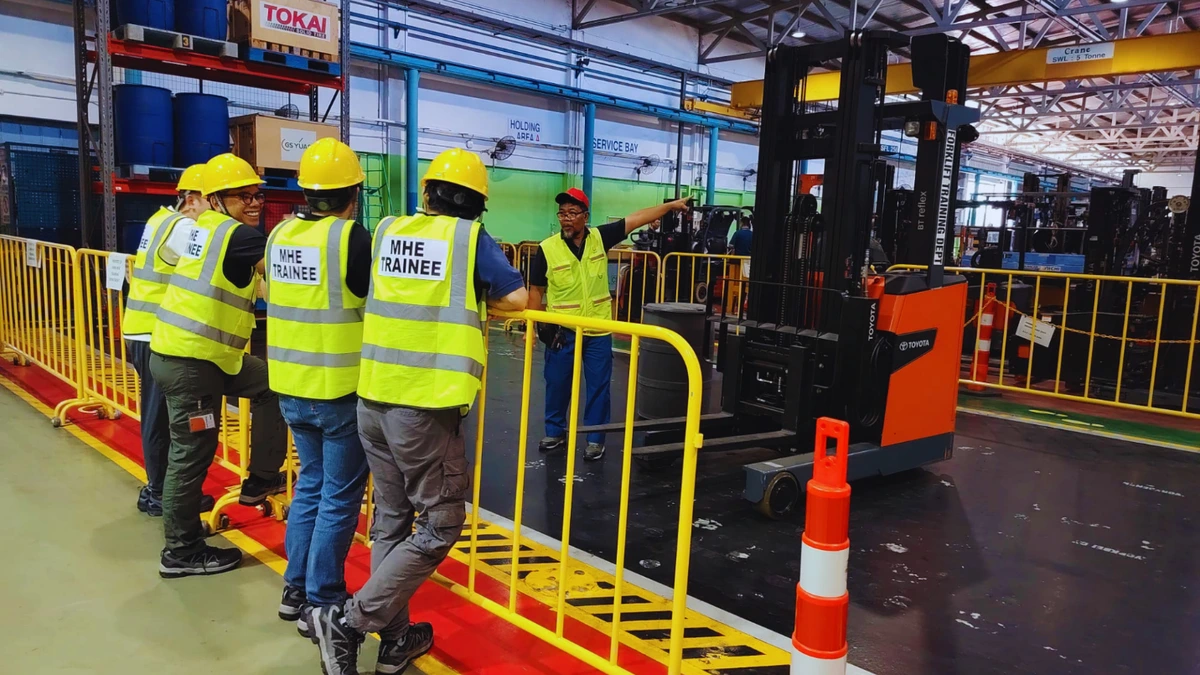
UMW's training courses are structured to build both competence and confidence in every participant. The curriculum covers essential topics such as pre-operation inspections, load handling techniques, and safe manoeuvring in tight spaces. Trainees practise these skills under the guidance of experienced instructors, receiving immediate feedback on their performance. The practical sessions are particularly valuable, as they allow operators to develop muscle memory and instinctive reactions to common warehouse scenarios. Whether operating a counterbalance truck, a reach truck, or a powered pallet truck, graduates of these programmes demonstrate consistently higher skill levels and greater situational awareness than their untrained counterparts.
Extending Equipment Life Through Operator Education
One of the most significant yet overlooked benefits of professional training is its impact on equipment longevity. Operators who have been properly instructed treat their machines with respect. They avoid harsh braking, sudden acceleration, and overloading – all of which accelerate component wear. They also perform daily inspections that catch minor issues before they become major failures.
UMW's programmes place particular emphasis on preventive maintenance practices. Trainees learn to check fluid levels, inspect tyres for damage, and identify warning signs such as unusual noises or vibrations. They also receive guidance on proper battery care for electric models and basic troubleshooting techniques. When these practices are consistently applied, the interval between major servicing extends significantly. For a typical fleet of forklifts and powered pallet trucks, this translates into substantial savings on spare parts, labour, and downtime. Moreover, a well-maintained fleet retains higher resale value, should the business decide to upgrade or replace older units.
Creating a Safety-First Culture in the Workplace
Safety is not just a regulatory requirement; it is a fundamental responsibility of every employer. Singapore's Ministry of Manpower has established clear guidelines for forklift operation, and non-compliance can result in severe penalties. However, the true cost of inadequate training goes far beyond fines. Workplace accidents cause human suffering, damage company reputation, and create a climate of fear that undermines morale.
UMW's training courses are designed to foster a safety-first mindset in every participant. The curriculum covers hazard identification, risk assessment, and emergency response procedures. Operators learn how to assess their working environment for potential dangers, such as uneven surfaces, blind corners, or overhead obstructions. They also practise defensive driving techniques that help them anticipate and avoid dangerous situations. The training includes specific guidance on operating different types of equipment, including reach trucks, counterbalance forklifts, and powered pallet trucks, each with its own handling characteristics. By promoting a culture of safety consciousness, organisations can dramatically reduce their accident rates and create a more positive work environment.
Why UMW Is the Preferred Training Partner
Choosing the right training provider is a critical decision that affects the quality of instruction and the long-term competence of your workforce. UMW brings decades of industry experience to its courses, with trainers who possess deep practical knowledge of material handling equipment and warehouse operations. These instructors do not simply deliver theoretical content; they share real-world insights gained from years of working in the field.
UMW's commitment to quality extends to its continuous curriculum improvement process. All courses are regularly updated to incorporate the latest regulatory changes from MOM and SSG, as well as emerging best practices in the industry. This ensures that participants receive training that remains relevant and effective. The courses cater to a wide range of skill levels, from complete beginners to experienced operators seeking refresher or upgrade training. UMW also provides training on specific equipment types, including powered pallet trucks, ensuring that operators are competent with the machines they will actually use. By partnering with UMW, businesses gain access to a comprehensive training ecosystem that supports their operational goals and compliance requirements.
The Business Case for Professional Training
Investing in operator education is not an expense; it is a strategic investment with measurable returns. The immediate benefits of reduced accidents and lower maintenance costs are obvious, but the long-term advantages are equally compelling. A well-trained workforce is more adaptable, able to handle new equipment and changing operational requirements with minimal disruption. This flexibility is invaluable in Singapore's dynamic business environment.
Furthermore, accredited training enhances your company's reputation as a responsible employer. Customers and partners are increasingly attentive to safety standards and ethical practices. When you can demonstrate that your operators are properly certified, you build trust and differentiate yourself from competitors who may cut corners. The cost of training is modest compared to the potential costs of accidents, downtime, and regulatory penalties. By ensuring that every operator, whether on a reach truck or a powered pallet truck, is fully trained, you protect your people, your assets, and your reputation. UMW's programmes offer a structured, effective pathway to achieving these outcomes.
Frequently Asked Questions
-
How long does a typical forklift training course take to complete?
Most MOM-approved courses run for three to five days, covering both theoretical knowledge and practical assessments. Refresher courses for experienced operators are shorter, typically lasting one to two days. -
Is the certification recognised across different industries in Singapore?
Yes, as long as the training provider is accredited by MOM and SSG, the certification is valid across all sectors, including logistics, construction, manufacturing, and warehousing. -
Do I need to provide my own forklift for the practical training sessions?
No. UMW supplies fully maintained equipment, including counterbalance forklifts, reach trucks, and powered pallet trucks, for all practical training. You are welcome to use your own machines if preferred. -
How often should operators renew their forklift certification?
MOM does not specify a mandatory expiry date, but industry best practice recommends refresher training every three years or whenever an operator is assigned to new equipment or a different warehouse layout. -
Can training help reduce damage to storage racking and other infrastructure?
Absolutely. Accredited courses teach operators precise control, spatial awareness, and safe approach techniques, significantly reducing the frequency of collisions and racking strikes.
Read another Article: Forklifts or Racking – Making the Right Warehouse Choice
Posted July 15, 2026 01:58
 Singapore
Add Your Comment
 RSS Feed
Recent Blog Entries
Tags
Archive
- August 2026
- July 2026
- June 2026
- May 2026
- April 2026
- March 2026
- February 2026
- August 2025
- July 2025
- June 2025
- May 2025
- April 2025
- March 2025
- February 2025
- January 2025
- December 2024
- November 2024
- October 2024
- September 2024
- August 2024
- July 2024
- June 2024
- May 2024
- April 2024
- March 2024
- February 2024
- January 2024
- December 2023
- November 2023
- October 2023
- September 2023
- August 2023
- July 2023
- June 2023
- May 2023
- April 2023
- March 2023
- February 2023
- January 2023
- December 2022
- November 2022
- October 2022
- September 2022
- August 2022
- July 2022
- June 2022
- May 2022
- April 2022
- March 2022
- February 2022
- January 2022
- December 2021
- November 2021
- October 2021
- September 2021