How to Choose Your Taekwondo Class Level
Finding the right Taekwondo class in Singapore can feel like a puzzle. You might be a complete beginner who has never worn a dobok, or an experienced martial artist returning after years away. Each stage of learning demands a different training environment. A class that pushes advanced students will overwhelm a novice, while a slow-paced beginner session will bore a seasoned practitioner. This guide helps you assess your current ability and match it with the appropriate level, whether you are exploring Taekwondo for fitness, discipline, or self-defence.
Unlike systems such as Krav Maga Singapore, which focus on rapid, real-world neutralisation techniques, Taekwondo follows a structured belt progression from white to black. Understanding where you fit on this ladder ensures steady improvement without injury or frustration. The following sections break down beginner, intermediate, and advanced classes, plus key factors like instructor quality and trial sessions. By the end, you will confidently choose a class that fits your skill level and personal goals.
Key Takeaways:
-
Beginners need classes that emphasise basic stances, slow repetition, and patient instructors who provide individual corrections.
-
Intermediate students require sparring introductions, combination kicks, and increased physical conditioning.
-
Advanced practitioners need expert black belt instructors, competition training, and philosophical teachings.
-
Always attend a trial class before enrolling; OP Academy offers free trial sessions for all levels.
-
Class frequency and schedule consistency matter more than chasing a higher belt rank quickly.
What Makes a Beginner Taekwondo Class Suitable?
A well-designed beginner class assumes no prior knowledge. The first lessons cover fundamental stances like front stance (ap seogi), walking stance, and basic blocks (low block, middle block). Punches and kicks are introduced one at a time, often with a focus on chambering and proper hip rotation. In a quality beginner session, the pace is deliberately slow so that muscle memory builds correctly. Instructors walk around to adjust posture, and students are encouraged to ask questions without feeling rushed.
Class size is critical for novices. Groups larger than fifteen often mean less individual attention. Look for academies like OP Academy that cap beginner classes at around twelve participants. Also, observe the atmosphere: do higher belts help newcomers? A supportive culture where advanced students assist during drills indicates a healthy school. If you are also considering other martial arts, note that a typical Krav Maga Singapore beginner course feels very different – it jumps straight into situational defences without extensive form practice. Taekwondo’s gradual approach suits those who prefer step-by-step learning. Always request a trial to feel the energy.
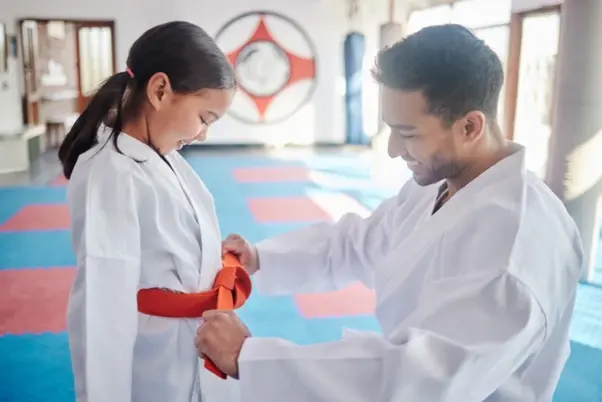
How to Identify an Intermediate Taekwondo Class
Once you have mastered basic blocks, can perform Taegeuk 1-3 poomsae, and kick waist-high with control, you are ready for intermediate training. Classes at this level introduce more dynamic movements: roundhouse kicks in combination, back kicks, axe kicks, and light-contact sparring. Warm-ups become more intense, including push-ups, sit-ups, and plyometric jumps. Instructors begin emphasising speed, precision, and timing rather than just completing moves. You will also learn to read an opponent’s weight shift during partner drills.
Physical conditioning is a regular part of intermediate sessions. Expect exercises that build explosive leg power and cardiovascular endurance, such as ladder drills and bag work. Sparring (kyorugi) appears under strict supervision with headgear, chest protector, and shin guards. The focus is on controlled contact and learning to score points, not on brute force. In Singapore, many intermediate students cross-train in other disciplines like Krav Maga classes Singapore to improve their self-defence reaction time. However, pure Taekwondo intermediate classes remain distinct – they refine your athletic technique while introducing basic competition rules.
Features of an Advanced Taekwondo Class for Experts
Advanced classes are for red belts and above who have clear command of all basic and intermediate skills. Training here is intense, highly technical, and often longer (90 minutes to two hours). Sessions include complex poomsae with advanced footwork patterns, jump spinning kicks, and sometimes weapon training (e.g., staff or nunchaku) depending on the school. Sparring is frequent, fast, and competitive, often with specific objectives like landing three counterattacks or defending against multiple attackers. You will also study Taekwondo philosophy in depth, including the meaning of each belt colour and the history of the art.
Instructor qualifications matter greatly at this level. Look for masters who hold at least 4th Dan black belt and have competition coaching experience. They should provide detailed feedback on minute adjustments – the angle of your supporting foot, the snap in your kick, the timing of your breath. An advanced class also includes leadership training, where senior students assist in teaching lower belts. This reinforces your own skills and builds community. Some advanced practitioners in Singapore learn Krav Maga Singapore alongside Taekwondo to gain practical self-defence skills that sport Taekwondo may lack, but within Taekwondo itself, the focus remains on mastery of traditional forms and Olympic-style sparring.
Additional Considerations Beyond Belt Colour
Skill level is not the only factor. Your personal schedule, learning style, and long-term goals matter equally. For working adults, evening or weekend classes are essential. Parents may need classes that run concurrently with children’s sessions. OP Academy offers flexible timetables across multiple locations, like Yishun and Bedok. Also consider how progress is tracked: regular assessments, belt tests, and written or video feedback help you know if you are improving. Avoid schools that promote students automatically without a demonstration of ability.
Trial classes are your best tool. Almost every reputable dojang offers one or two free sessions. Use these to observe class culture: do students bow respectfully? Do instructors correct mistakes kindly? Is the facility clean with padded floors? Pay attention to how you feel during and after the trial – energised and eager to return is a good sign. Compare this to trying a Krav Maga Singapore trial, which often feels more intense and scenario-based. The right class is one where you leave looking forward to the next session, not dreading it.
Frequently Asked Questions
1. Can I start Taekwondo as a complete beginner with no fitness background?
Yes. Beginner classes are designed for exactly that. Instructors modify exercises and teach at your own pace. Two sessions per week are ideal for building habit and stamina.
2. How long does it take to move from beginner to intermediate?
With consistent training (2-3 classes weekly), most students reach an intermediate level in 6 to 9 months. This varies based on natural aptitude, attendance, and home practice.
3. What should I wear to my first trial class?
Comfortable athletic wear, like a t-shirt and track pants. Avoid jeans or jewellery. The school will lend you a belt if needed. Barefoot training is standard.
4. Are Taekwondo classes safe for children and older adults?
Yes, when taught properly. Reputable academies separate classes by age and skill. Children learn non-contact drills first; seniors focus on balance and low-impact movements. Always inform the instructor of any medical conditions.
5. How is Taekwondo different from Krav Maga Singapore?
Taekwondo emphasises sport, form, and progression through belts over the years. Krav Maga focuses on rapid self-defence for real-world threats, often without belt ranking. For pure discipline and athletic development, Taekwondo is ideal; for practical street safety, consider Krav Maga as a supplement.
Read another Article: Best Taekwondo Camps for Kids in Singapore
Posted May 20, 2026 00:38
 Krav Maga Singapore
Add Your Comment
 RSS Feed
Recent Blog Entries
Tags
Archive
- August 2026
- July 2026
- June 2026
- May 2026
- April 2026
- March 2026
- February 2026
- August 2025
- July 2025
- June 2025
- May 2025
- April 2025
- March 2025
- February 2025
- January 2025
- December 2024
- November 2024
- October 2024
- September 2024
- August 2024
- July 2024
- June 2024
- May 2024
- April 2024
- March 2024
- February 2024
- January 2024
- December 2023
- November 2023
- October 2023
- September 2023
- August 2023
- July 2023
- June 2023
- May 2023
- April 2023
- March 2023
- February 2023
- January 2023
- December 2022
- November 2022
- October 2022
- September 2022
- August 2022
- July 2022
- June 2022
- May 2022
- April 2022
- March 2022
- February 2022
- January 2022
- December 2021
- November 2021
- October 2021
- September 2021